
Article
Rethinking Pupil Agency in UK Classrooms through Learning Platforms and 1:1 Digital Deployment

As schools across the UK increasingly integrate technology into teaching and learning, a crucial question demands our attention: Are we using digital tools to simply deliver content, or to transform the way students engage with their own learning?
In the current educational climate, shaped by 1:1 digital device programmes, cloud-based learning platforms, and growing emphasis on student wellbeing, we are presented with a timely opportunity to rethink pupil agency and redefine what meaningful student voice looks like in the classroom.
This article explores how learning platforms, combined with thoughtful 1:1 digital deployment, can empower students to curate, reflect on, and lead their own learning journeys. In doing so, we align with Ofsted’s focus on personal development and wellbeing, while staying grounded in robust, research-informed pedagogical approaches.
From Passive Participants to Active Agents
Pupil agency refers to a learner’s ability to take ownership of their education through informed choices, reflection, and autonomy. Traditionally, agency has often been constrained by fixed curricula and teacher-led instruction. However, with the right digital tools and a shift in mindset, classrooms can become ecosystems of ownership, where students are not passive consumers of knowledge but co-constructors of meaning.
Research from the OECD (2019) emphasises that fostering student agency contributes to deeper engagement, resilience, and long-term achievement. Similarly, the Education Endowment Foundation (EEF) identifies metacognition and self-regulation as highly effective, low-cost strategies with particularly strong impact for disadvantaged pupils.
Learning Platforms as Catalysts for Dialogue, Articulation and Oracy
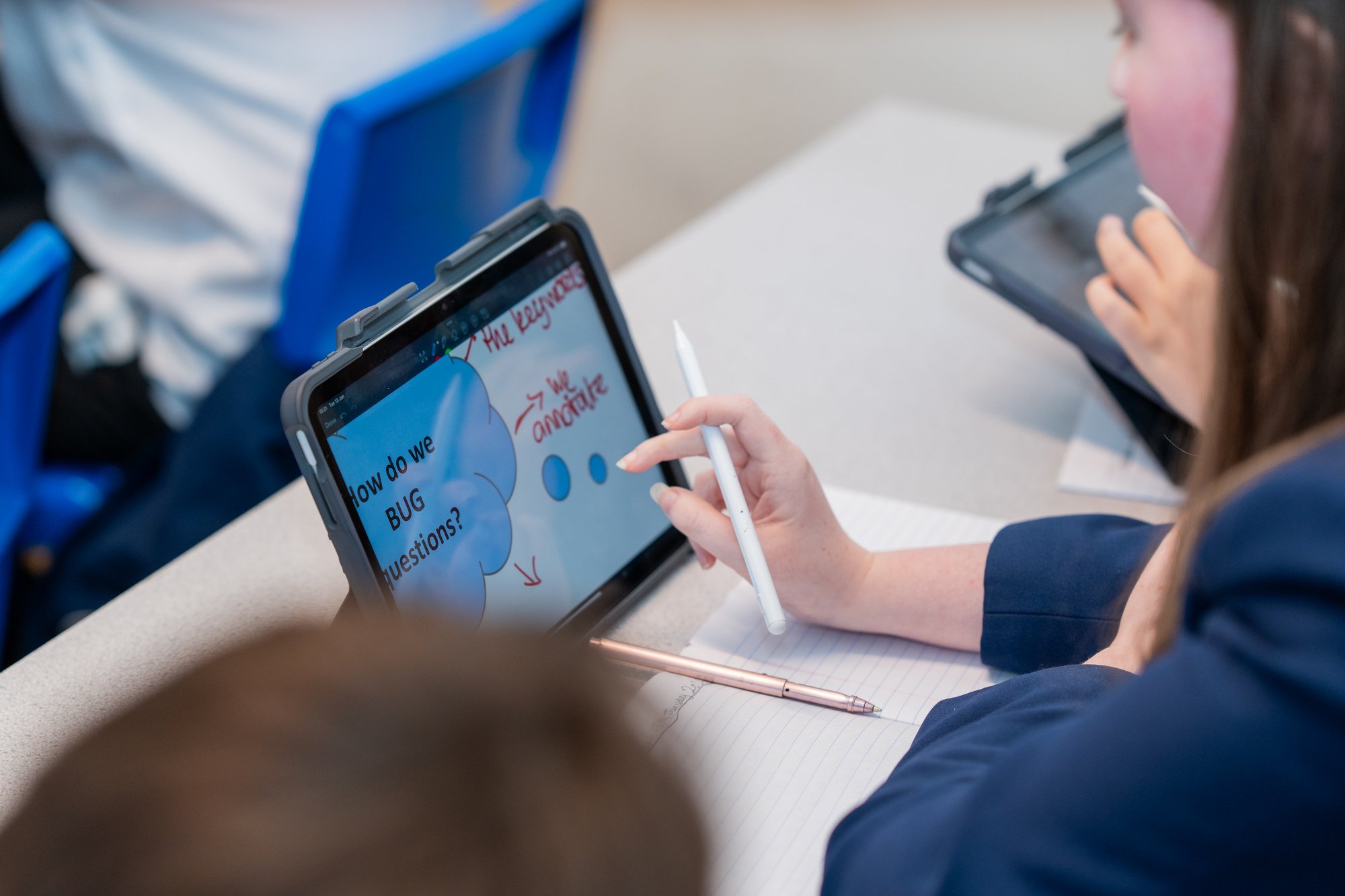
Modern learning platforms provide a space where learning is documented, discussed, and revisited. Features like audio and video recording (dual coded approaches), annotation tools, and collaborative feedback spaces allow students to explain their thinking, track their progress, and build portfolios of work that tell a story over time.
This process aligns with Doug Lemov’s emphasis on “practice with feedback” and the intentional development of cognitive habits. In Teach Like a Champion 3.0, Lemov argues that thinking becomes visible when students are given repeated opportunities to explain aloud, listen to themselves, and respond to critique. A well-chosen learning platform can enable just that, dialogue that supports development, not just delivery.
These tools also help embed Rosenshine’s Principles of Instruction into digital environments:
- “Present new material in small steps” is supported by tools that let students control the pace of content engagement.
- “Provide models and scaffolds” through exemplars and teacher feedback embedded into student workspaces.
- “Obtain a high success rate” by enabling real-time feedback and formative assessment mechanisms.
1:1 Digital Deployment: Shifting the Balance of Power
Equipping each student with a device opens up opportunities for personalised learning and greater autonomy. Instead of waiting for feedback at the end of a task, students can receive, and act on, immediate guidance. Instead of relying solely on teacher direction, they can access resources, review explanations, and build their own understanding, all within a structured digital environment.
This dynamic supports self-regulated learning, where students learn to set goals, monitor progress, and reflect on outcomes. According to the EEF, such practices yield approximately seven months of additional progress and are particularly valuable when embedded into routine teaching practice.
Digital tools also lend themselves well to dual coding, as proposed by Allan Paivio, where learners combine visual and verbal information to enhance understanding and memory. The ability to capture explanations alongside diagrams or annotate images with voice notes builds deeper cognitive connections, reinforcing learning over time.
Student-Led Conferences and Digital Portfolios
One of the most transformative practices enabled by digital tools is the introduction of student-led conferences. These are structured moments where pupils present their learning journeys to teachers and families, sharing not just products, but the processes and reflections behind them.
Digital portfolios underpin this model. Curated over time, they offer students the chance to showcase progress, narrate their growth, and reflect on challenges. This turns learning into a coherent story, rather than a collection of isolated tasks. It also develops pupils’ capacity to self-evaluate and set meaningful goals, core components of personal development.
Such practices echo the principles of dialogic learning, where communication is not just a method of sharing knowledge, but a means of constructing it. The cognitive benefits of articulating thinking, justifying reasoning, and receiving feedback are substantial, particularly when supported by well-structured digital platforms.
Articulation as Integrity: Safeguarding Authentic Learning in the Age of AI
As AI tools become more accessible in schools, there is a growing concern about authenticity and integrity in student work. A text-based response generated by AI may seem impressive but often lacks evidence of true understanding.
Encouraging students to articulate their thinking orally or through multimedia becomes essential. Not only does this provide a more accurate picture of what they know and can do, it also supports the development of communication skills, emotional intelligence, and metacognitive awareness.
These skills are central to programmes like Oracle, which promote dialogic teaching and the development of reasoning through spoken language. When learners are asked to explain “why” and “how,” rather than simply submit “what,” they build a sense of academic integrity and self-efficacy.
Practical Recommendations for Schools and Educators
To maximise the benefits of learning platforms and 1:1 deployment in enhancing pupil agency, educators might consider:
- Embedding student-led conferences and regular portfolio reviews into the school year.
- Using multimedia tools to support metacognitive reflection, not just assessment.
- Encouraging students to document learning processes, not just outcomes.
- Supporting staff with CPD on self-regulated learning, digital pedagogy, and feedback loops.
- Designing classroom routines that blend Rosenshine’s principles with platform-enabled practices.
Final Thoughts: Digital as Dialogue
Digital technology in education is often framed in terms of delivery: faster access to content, more efficient marking, and seamless communication. But its true potential lies elsewhere.
When implemented with care and purpose, learning platforms and 1:1 devices can become instruments of dialogue, enabling students to speak, reflect, and shape their own learning experiences. They shift the teacher-student relationship from one of instruction to one of collaboration and co-construction, where agency, voice, and personal development come to the fore.
As we navigate the complexities of the digital world, let us remember: technology is not just a tool, it’s a medium for meaning.
True pupil agency doesn’t happen by chance. It is planned, modelled, and sustained through intentional practice, supported, not substituted, by technology.
Further Reading:
- OECD (2019). OECD Future of Education and Skills 2030: Conceptual Learning Framework – Student Agency.
- Education Endowment Foundation (2021). Metacognition and Self-Regulated Learning.
- Lemov, D. (2021). Teach Like a Champion 3.0.
- Paivio, A. (1991). Dual Coding Theory: Retrospect and Current Status.
- Rosenshine, B. (2012). Principles of Instruction: Research-Based Strategies That All Teachers Should Know.
- Mercer, N. (2000). Words and Minds: How We Use Language to Think Together.
- Berger, R., Rugen, L. & Woodfin, L. (2014). Leaders of Their Own Learning: Transforming Schools Through Student-Engaged Assessment.
- Myhill, D. (2018). The Development of Children’s Writing and Thinking through Talk.

-1.png?width=352&name=Dylan%20Wiliam%20The%20Future%20of%20Formative%20Assessment%20(3)-1.png)
.png?width=352&name=Copy%20of%20Events%20(3).png)