Case Study
Driving Consistency and Adaptive Practice at The Orme Academy
Discover how a standardised digital framework strengthened feedback, adaptiveness and whole-school coherence at The Orme Academy.
The Orme Academy is an 11–16 secondary school in Newcastle-under-Lyme, guided by a clear ethos: Empowering Learners for Life. Under Principal Mark Boughey’s leadership, the Academy maintains relentlessly high expectations, ensuring that academic progress, organisation and personal development are treated as interconnected strands of the same ambition.
As digital learning became part of daily life at the school, leaders saw that technology by itself would not improve outcomes. What made the difference was having a clear, shared approach. Without this, digital tools could create inconsistency from one classroom to the next.
Establishing a Standardised Structure
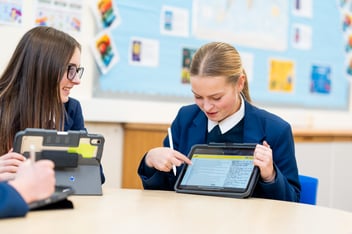
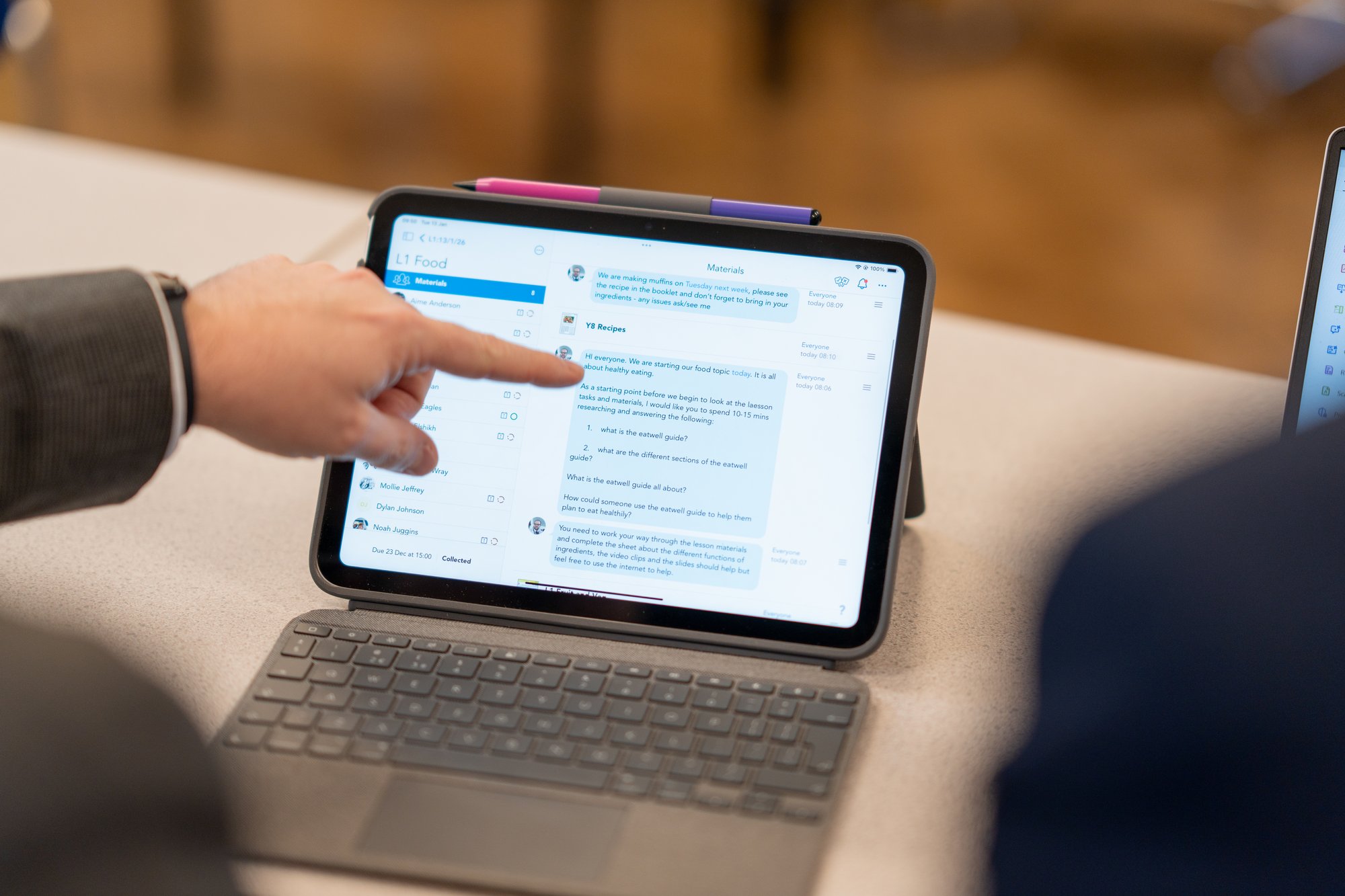
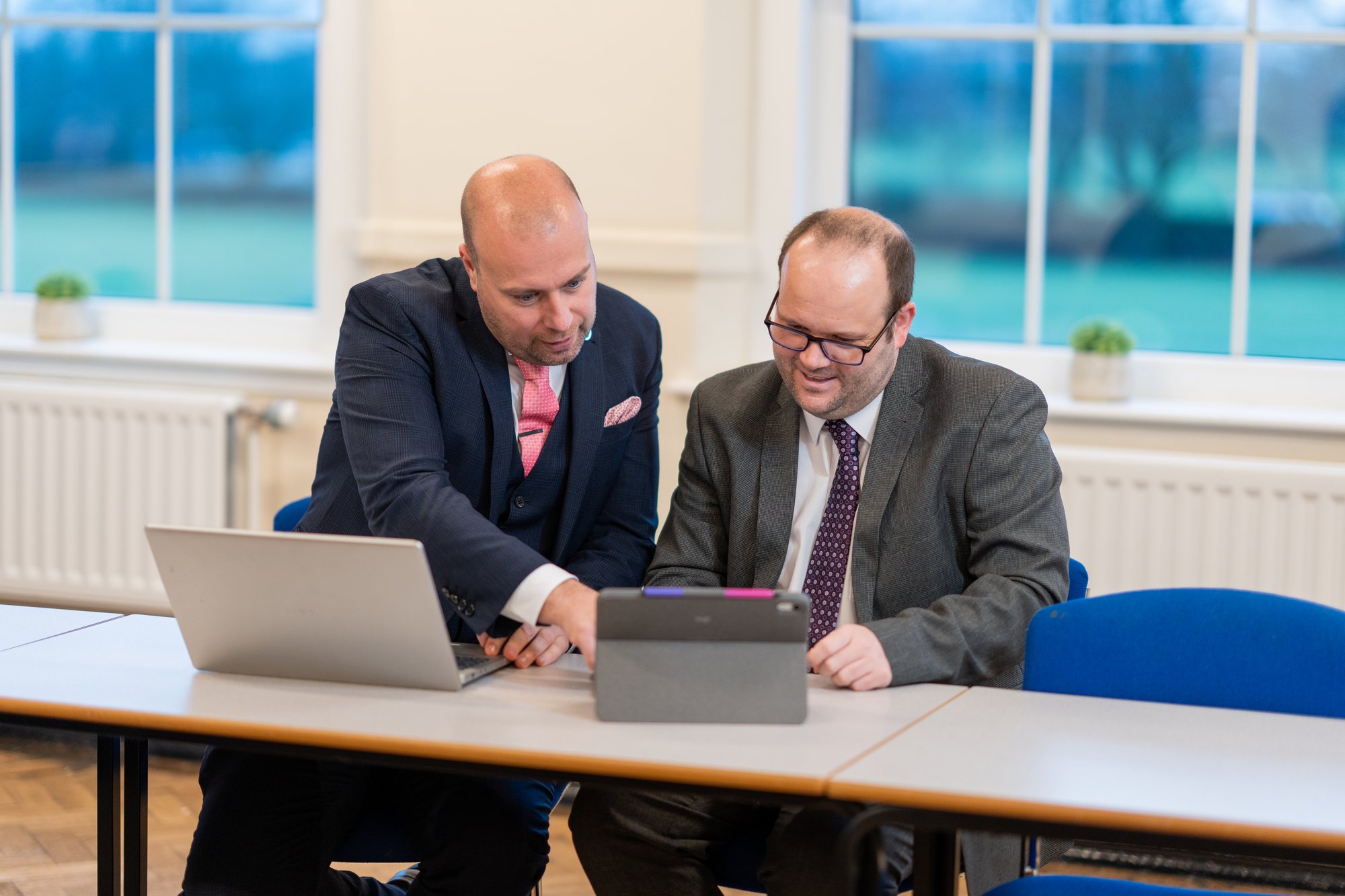
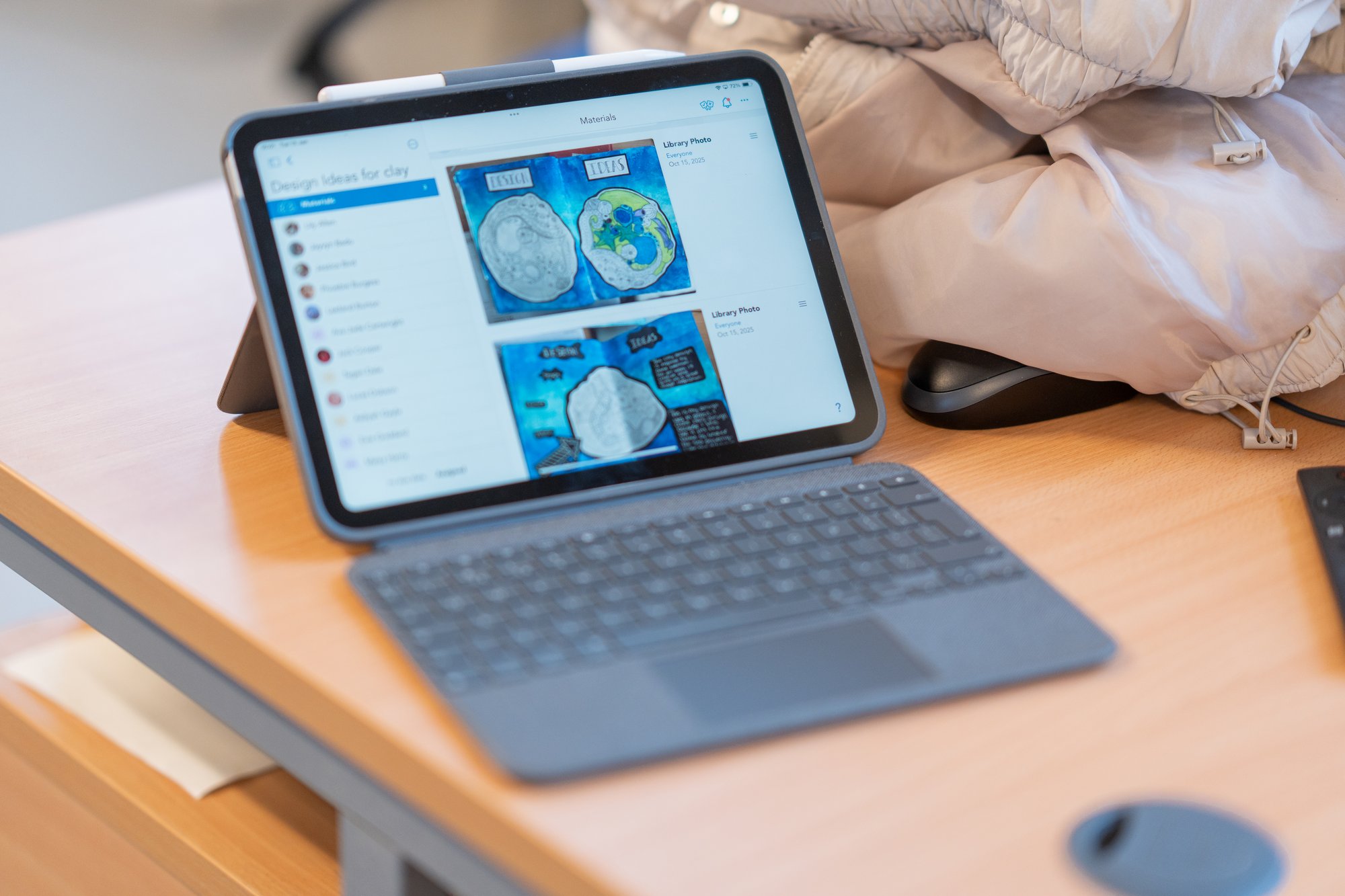
One of the most significant shifts at The Orme Academy has been the move towards a consistent, Academy-wide digital structure. Instead of each department building its own system, leaders implemented a shared approach to lesson organisation: the same folder structure across all subjects, resources and homework always in the same place, and submission and feedback routines that pupils can rely on whether they are in the classroom or at home.
Principal, Mark Boughey, explains: “One of the ways that Showbie has streamlined all lessons throughout the school is we’ve gone for a real standardised approach to how it’s set up.”
This clarity means pupils no longer have to relearn systems in each classroom. Year 9 pupil Jackson reflects: "It's really easy just to go back to a lesson that you feel you need to go over again."
Lessons and feedback are no longer scattered across exercise books that might be lost or left incomplete — pupils now have an accessible digital record they can return to whenever they need to review or strengthen their understanding.
“Everything is live and it’s all real time. Staff are able to address misconceptions fairly quickly. It’s making teaching more adaptable.”
Transforming Feedback into an Ongoing Process
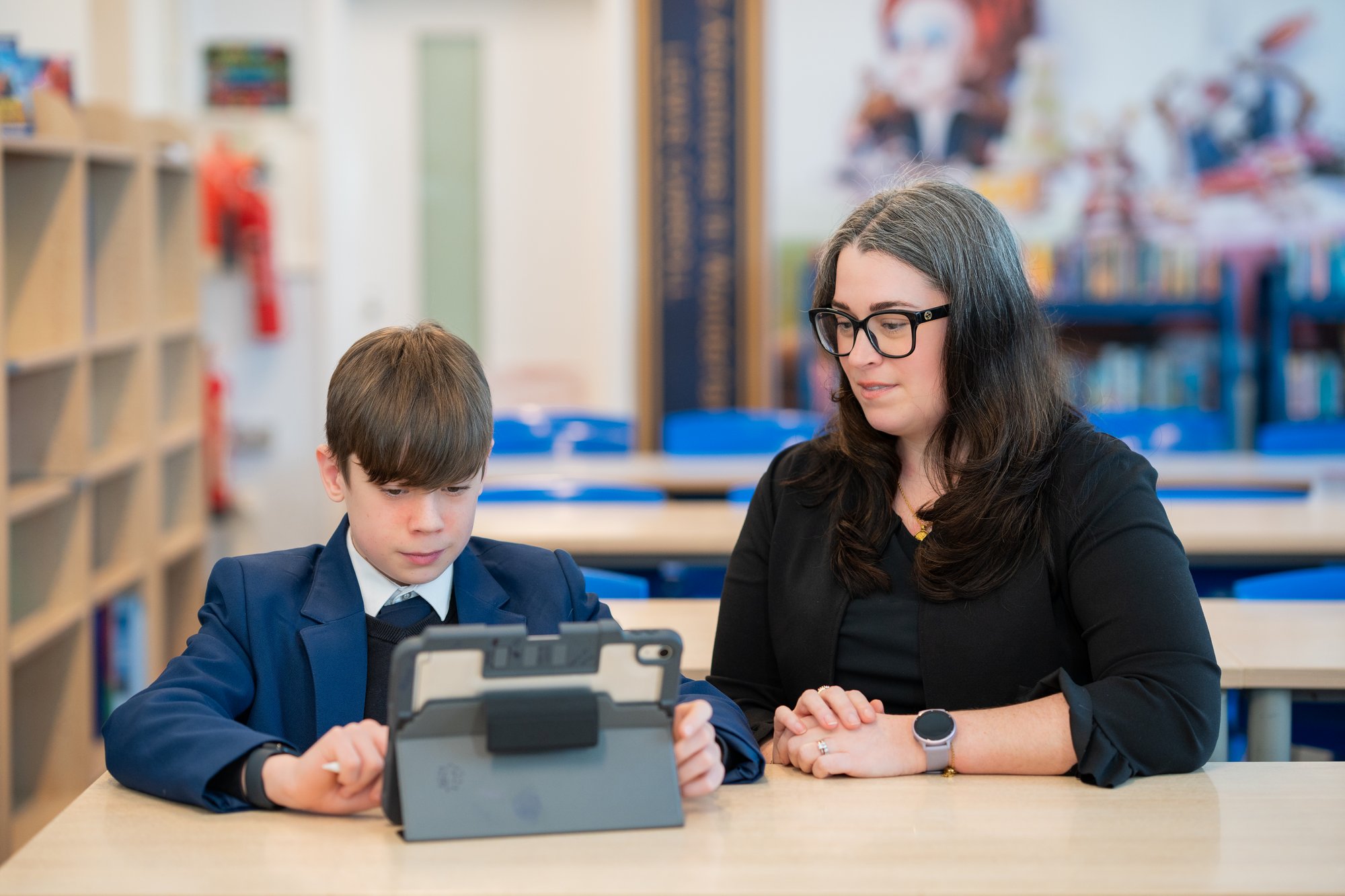
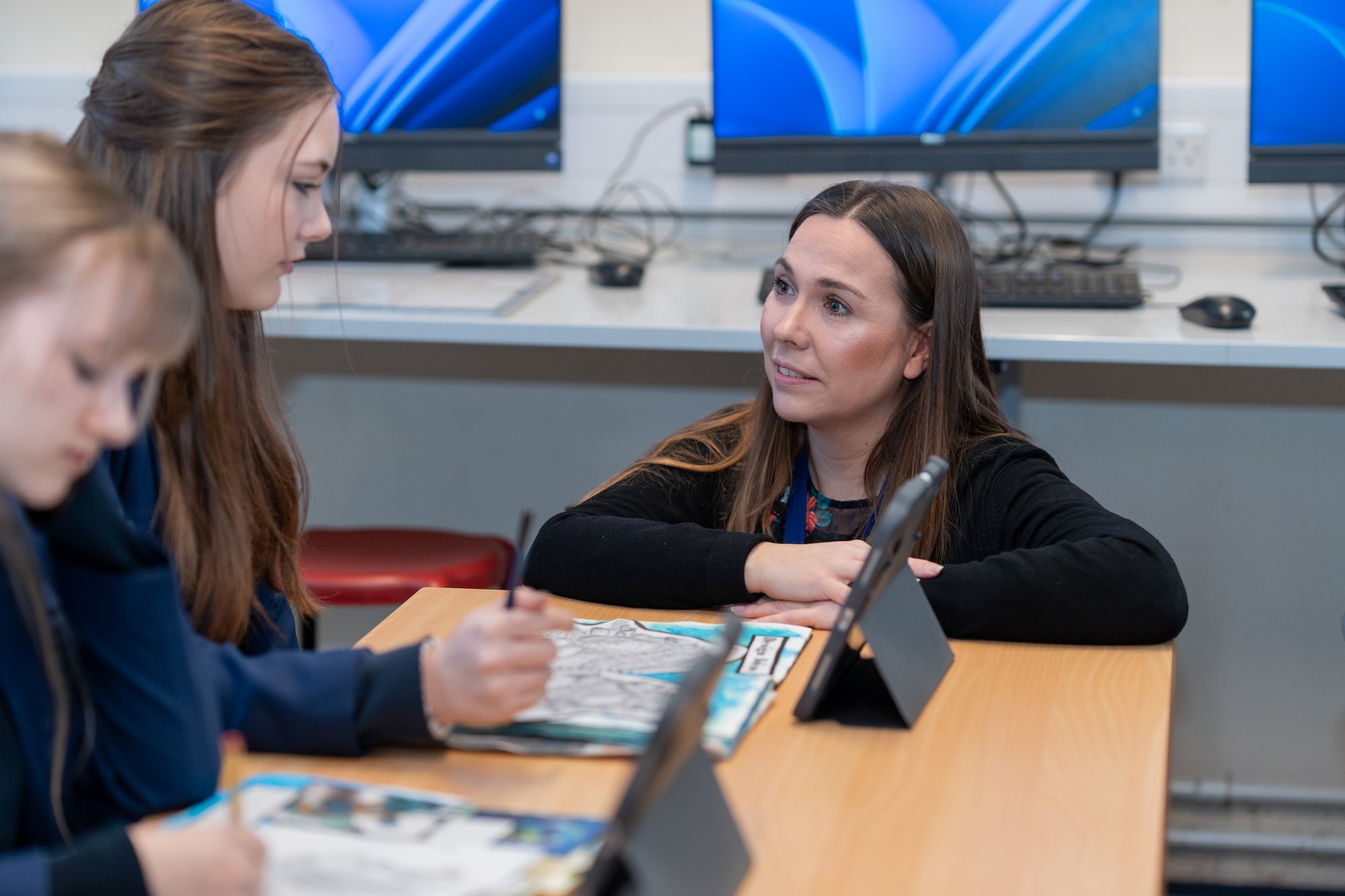
Alongside this structure, the Academy's feedback culture has transformed. Before, feedback was often delayed — books were collected, marked later, and returned after the moment had passed. Now, teachers check work as pupils complete it, add comments in real time, and record voice explanations that pupils can listen back to.
Head of Digital Strategy, Matt Jackson, notes the impact: "Feedback has consistently improved across the academy."
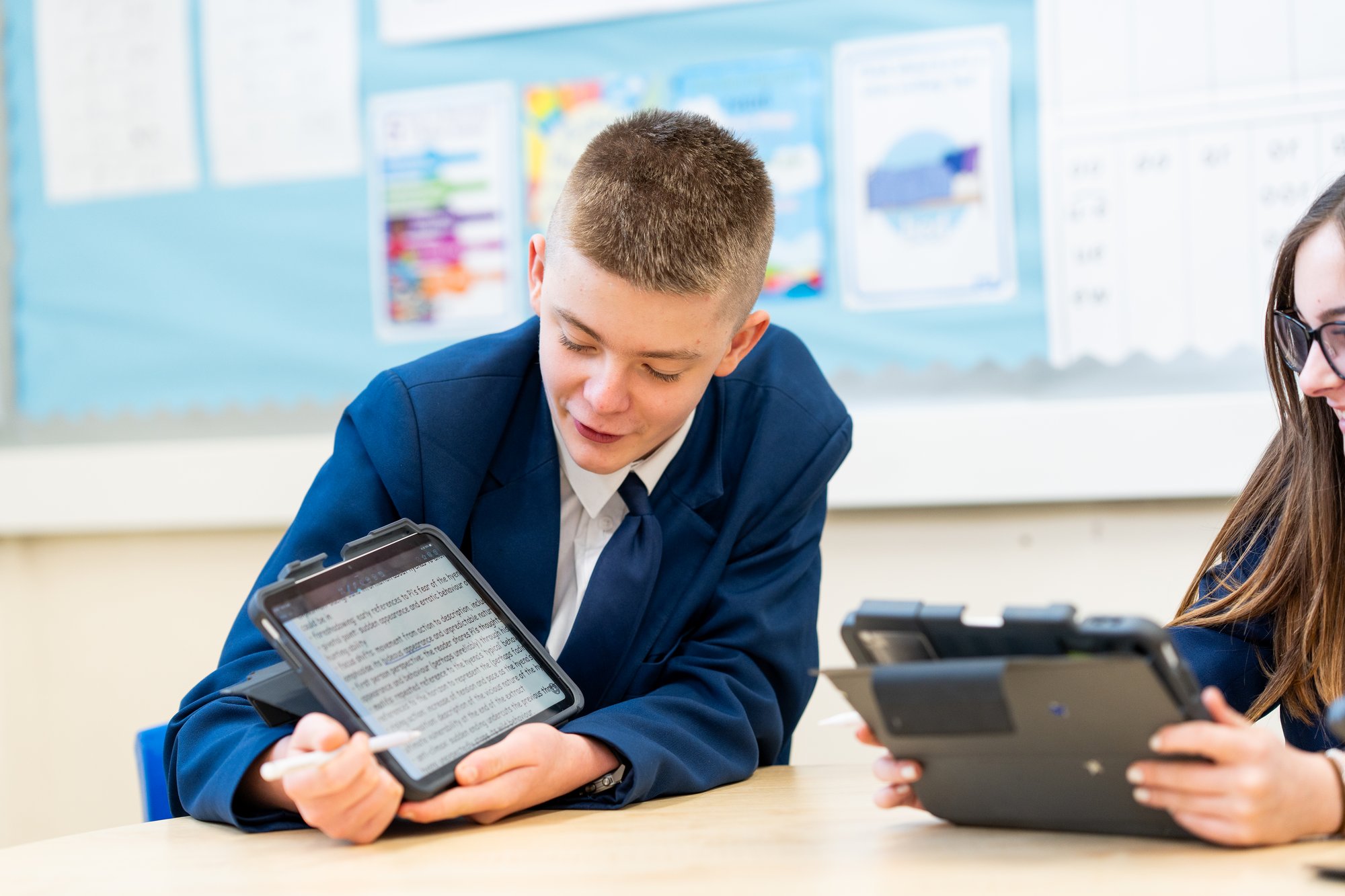
Voice annotations, video feedback and direct annotation on pupils' work have added nuance and personalisation that brief written comments rarely can match. Rather than a single line in a margin, teachers can talk through misconceptions, record a worked example, draw or write directly onto a submission.
“Feedback has consistently improved across the academy.”
As Mark Boughey observes: "There's a lot to be said psychologically for children hearing their trusted adult's voice." Hearing familiar, encouraging feedback rather than reading a written comment changes how pupils receive and respond to guidance — making it feel less like correction and more like a conversation.
Embedding Real-Time Adaptation
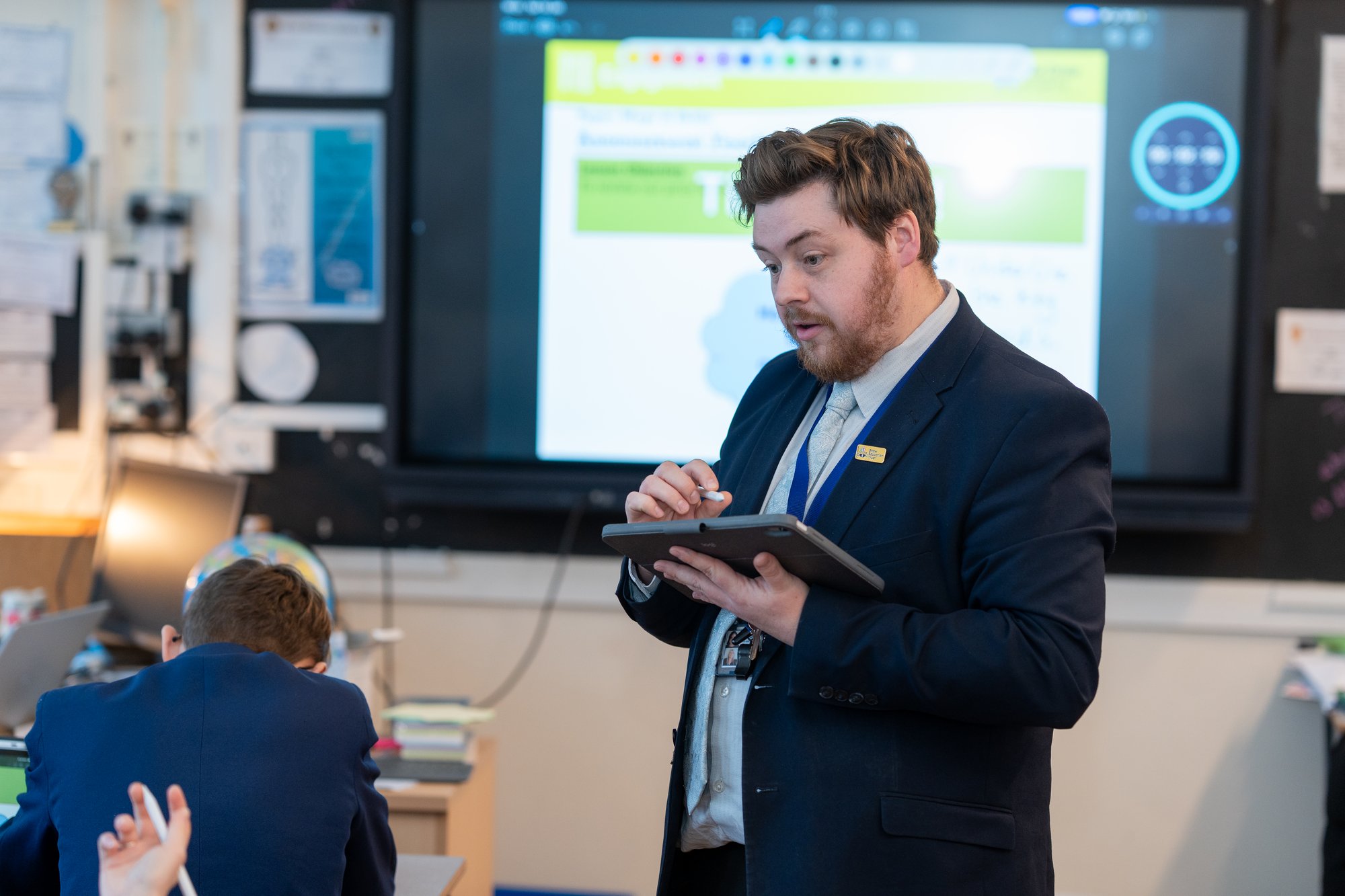
Teaching at The Orme Academy has also become more responsive. Diagnostic tasks and short quizzes are regularly used to check understanding before moving on, with responses visible immediately so misconceptions can be caught and addressed early.
Design and Technology teacher, Khenye Gager, explains: "We usually begin with an activity, maybe a quiz, checking the children's knowledge in real time."
Charlotte Woodall, Head of Science, describes a similar approach: "We try and do as much feedback as we can live in the lesson, we take photos of students' work and talk through any misconceptions."
Because everything happens in real time, teachers can adapt their support before misunderstandings become embedded.
Strengthening Inclusive Practice Through Structure
At The Orme Academy, inclusion is integrated into the instructional framework rather than treated as a separate layer. Assistant Principal, Ruth Parmar, explains: "Showbie has really helped to underpin our adapt strategy for our students with additional needs and particularly our most vulnerable students."
With a standard digital structure, teachers can add scaffolding, step-by-step instructions and recorded explanations alongside main lesson materials — supporting pupils without changing what is expected of them. Khenye Gager puts it simply: "We're able to meaningfully differentiate and adapt our lessons to each individual, that flexibility within the lesson is really profound."
All pupils follow the same curriculum, but now have the support that suits their needs, built in and discreet.
Professional Efficiency and Cultural Shift
The benefits extend beyond the classroom. Teachers spend less time photocopying, preparing duplicate resources or managing fragmented systems. Shared materials enable departments to collaborate more effectively, strengthening curriculum alignment while reducing repetition.
Mark Boughey summarises: "Showbie doesn't replace what you do currently. It enhances and produces a wealth of efficiencies."
These time savings enable teachers to focus more on teaching quality, planning lessons and responding to pupils’ needs.
Over time, digital learning has become woven into the school's culture. As Ruth Parmar reflects: "It has actually transformed the way we approach teaching and learning here, and all of us feel that the iPad has become like an extension of our arm."
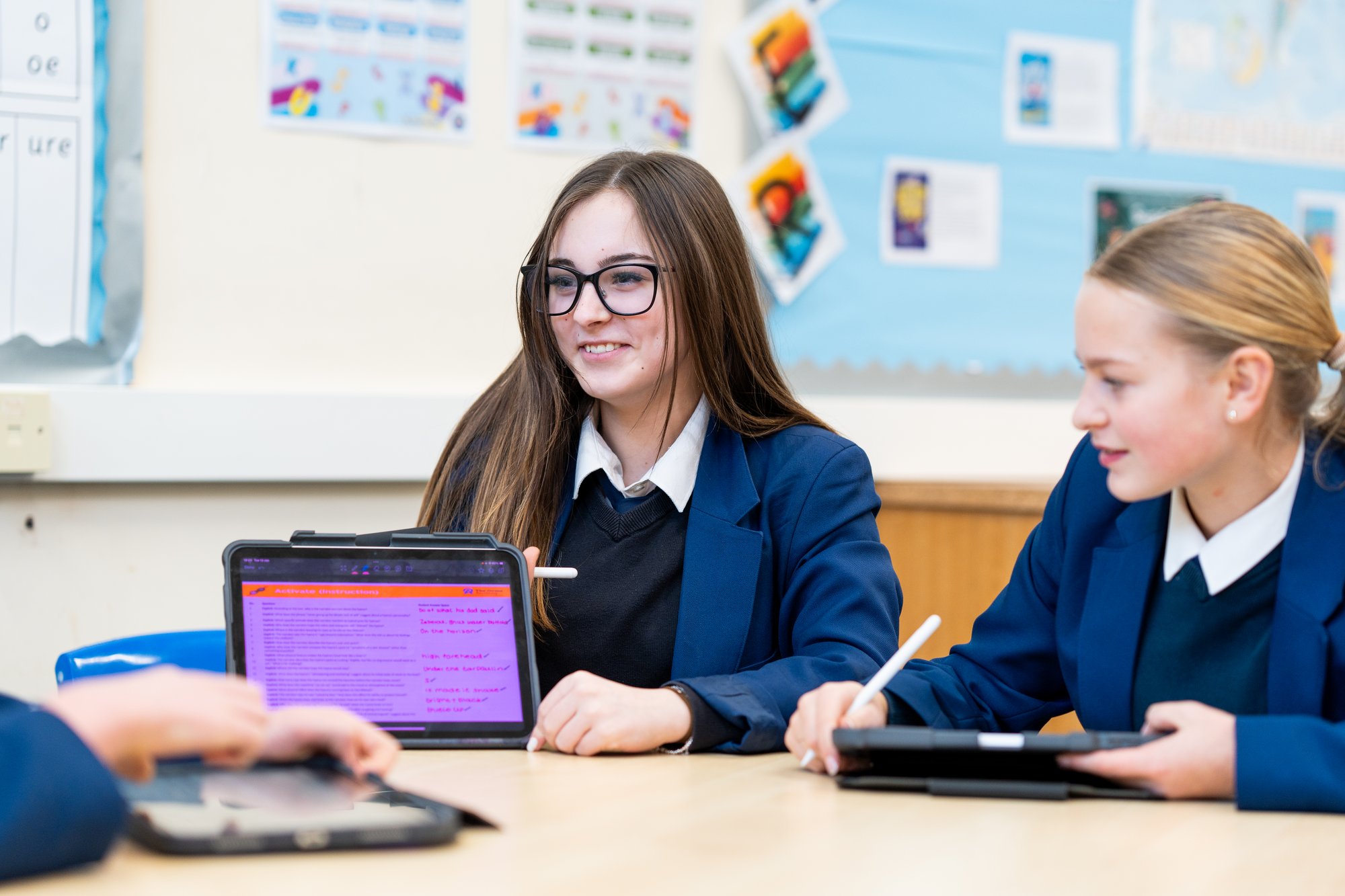
"Staff are spending less time photocopying resources, preparing resources and there's an amazing sense of collaboration among staff"
Looking Ahead
With a consistent digital framework now embedded across departments, The Orme Academy continues to refine adaptive teaching, strengthen feedback routines, and ensure that expectations remain high in every classroom. Digital learning here is not an add-on — it is the structure through which the Academy's commitment to empowering learners for life is made real, every day.

.png?width=352&name=Copy%20of%20Events%20(2).png)